
No, your anxiety isn't just in your head—and that's exactly why you can calm and heal it
You've tried everything—therapy, meditation, positive thinking, deep breathing exercises. Yet at 2 AM, your mind still races. Your chest still tightens during that important meeting. Your stomach still knots when your phone rings unexpectedly.
If this sounds familiar, you're not alone. There's a crucial element that many traditional approaches miss—and understanding it could transform your healing journey in ways you never thought possible.

Table of Content
- Anxiety lives in your body, not just your mind
- Take this quick assessment—how many sound like you?
- Why traditional approaches often fall short
- The bottom-up approach: Healing anxiety at its source
- How EFT tapping works for anxiety relief
- Creating your body-based anxiety toolkit
- How to do Tapping for anxiety: Let’s break down the steps
- Your path to deeper healing
- A gentle reminder as you move forward
Anxiety lives in your body, not just your mind
One of the most important revelations in modern anxiety treatment is that anxiety isn't simply a thought pattern—it's a nervous system state. When I work with clients, I explain that anxiety serves a biological purpose: it's designed to protect you and keep you safe in threatening situations.
Under normal circumstances, this protective mechanism works beautifully. Your body detects a potential danger, your nervous system activates, and you respond appropriately. But here's what happens for many of us: our bodies can become frozen in a state of anxiety even when no real threat exists.
Think about times when you've tried to reason yourself out of anxiety. You might tell yourself, "There's nothing to worry about," or "I'm safe right now," yet still feel your heart racing, your breathing shallow, and tension throughout your body. This disconnect happens because anxiety doesn't just reside in our thoughts—it lives in our physical body, stored in various organs, tissues, and cells.
This is why changing your thoughts alone isn't always enough. Your rational mind might understand there's no danger, but your body remains in a protective state, responding to triggers that may remind it of past threats or stresses.
Take this quick assessment—how many sound like you?
I've noticed some common threads among women who struggle with persistent anxiety. Take a moment to honestly assess yourself:
☐ You were a naturally sensitive or empathetic child
☐ You had caregivers who were emotionally or physically unavailable
☐ You learned early on to suppress difficult emotions
☐ You developed high-achieving tendencies and were often called "mature for your age"
☐ You find yourself absorbing others' emotional states
☐ You took on adult responsibilities before you were ready
If you checked 3 or more boxes, your anxiety likely has deep nervous system roots that traditional approaches struggle to reach. You may be experiencing what many of my clients do—anxiety that has become embedded in your nervous system through early experiences that taught your body to stay on high alert.

Why traditional approaches often fall short
Here's what many practitioners don't explain: when anxiety becomes a stored body state, purely cognitive approaches (like traditional talk therapy or positive affirmations) might not fully resolve it.
This isn't to say that understanding your thought patterns isn't valuable—it absolutely is. But when anxiety has become a default nervous system state, you need approaches that speak directly to the body's protective mechanisms.
"I spent years trying to think my way out of anxiety," shares Donna, one of my clients. "It wasn't until I learned to work with my body through EFT tapping that things really shifted. I realized my body was still responding to old threats that weren't present anymore."
The bottom-up approach: Healing anxiety at its source
When working with anxiety, I've found that a "bottom-up" approach often creates the most profound shifts. Rather than starting with the thinking mind (top-down), we begin with the body and nervous system (bottom-up).
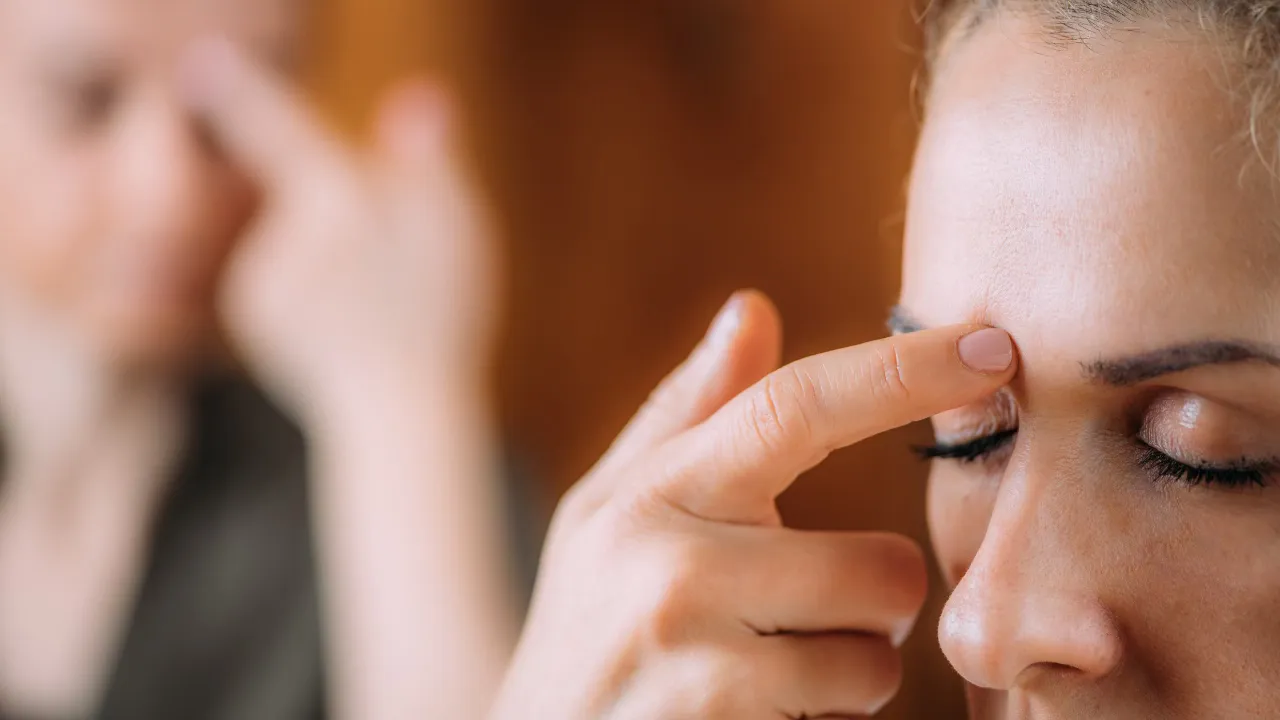
Emotional Freedom Techniques (EFT or "tapping") is particularly effective because it works directly with the body's nervous system while addressing emotional components. By gently tapping on specific acupressure points while acknowledging feelings and sensations, we can help the nervous system release patterns of anxiety it's been holding—sometimes for decades.
"What made the biggest difference for me," shares Melissa, a client who struggled with anxiety for years, "was understanding that my anxiety wasn't a character flaw or just negative thinking. It was my body trying to protect me based on old information. Once I started working with my nervous system through tapping rather than just trying to change my thoughts, everything began to shift."
How EFT tapping works for anxiety relief
EFT combines gentle fingertip tapping on specific acupressure points with mindful attention to your present emotional state. This process works through the body's primo vascular system—a network of pathways that communicates with the nervous system—helping to calm the body's "fight, flight, or freeze" response.
Anxiety is not just a thought problem; it's a whole-body experience. Racing thoughts, a tight chest, a knot in the stomach—these are your body's protective systems on high alert. What tapping does is give the nervous system a new signal of safety, so the body can begin to shift out of survival mode.
Many clients tell me they notice a sense of relief or calm even during their first session, and over time, their nervous system begins to respond more quickly to the signals of safety created through tapping.
EFT often brings a sense of relief in the moment, and with consistent practice, clients begin to see those changes extend into daily life—whether that’s more ease in stressful situations, a calmer baseline, or fewer spikes of anxiety.
In a session, we might gently explore:
-
The physical sensations of anxiety in your body, bringing awareness to where it shows up
-
Early experiences where similar feelings first took root
-
Acknowledging how these patterns once helped you feel safe, even if they no longer serve you today
-
Introducing new calming signals that help your body register "it's safe to let go"
As one client shared, "The difference with tapping is that I'm not just talking about my anxiety—I actually feel it change in the moment."
Relief often happens in layers. Some clients notice meaningful changes within weeks, while for others, it may take a few months of consistent practice. Over time, the nervous system can learn to return to a calmer baseline more quickly and stay there longer.
The beauty of this trauma-informed approach is that it respects your body's wisdom while equipping you with practical tools you can use anywhere, anytime—whether you're facing a stressful situation at work, a difficult conversation, or a wave of anxiety that comes out of nowhere.
Creating your body-based anxiety toolkit
Releasing anxiety doesn't need to be complicated, but it does require approaches that honor the body's role. Here are some practices you might consider adding to your toolkit:
-
Daily EFT tapping routines: Even 5-10 minutes can help regulate your nervous system
-
Somatic awareness practices: Simple body scans to notice where you hold tension
-
Gentle movement: Walking, stretching, or dance that helps process emotions
-
Breath work: Specific breathing patterns that signal safety to your nervous system
-
Creating physical safety: Adjusting your environment to help your body feel secure
Remember, the goal isn't to eliminate anxiety completely—it's a natural protective response. Rather, we're working to help your system recognize when it's responding to old stories rather than present threats.

How to do Tapping for anxiety: Let’s break down the steps
Why not experience a bit of EFT for yourself? Here's a simple but powerful exercise:
Set the scene: Find a quiet space and take one deep breath to center yourself.
Rate your current anxiety: On a 0-10 scale (0 = completely calm, 10 = overwhelming)
Begin tapping:
Step 1: Tap gently on the side of your hand (the fleshy part below your pinky) while repeating: "Even though I feel (this anxiety), I deeply and completely accept myself." Repeat this 3 times.
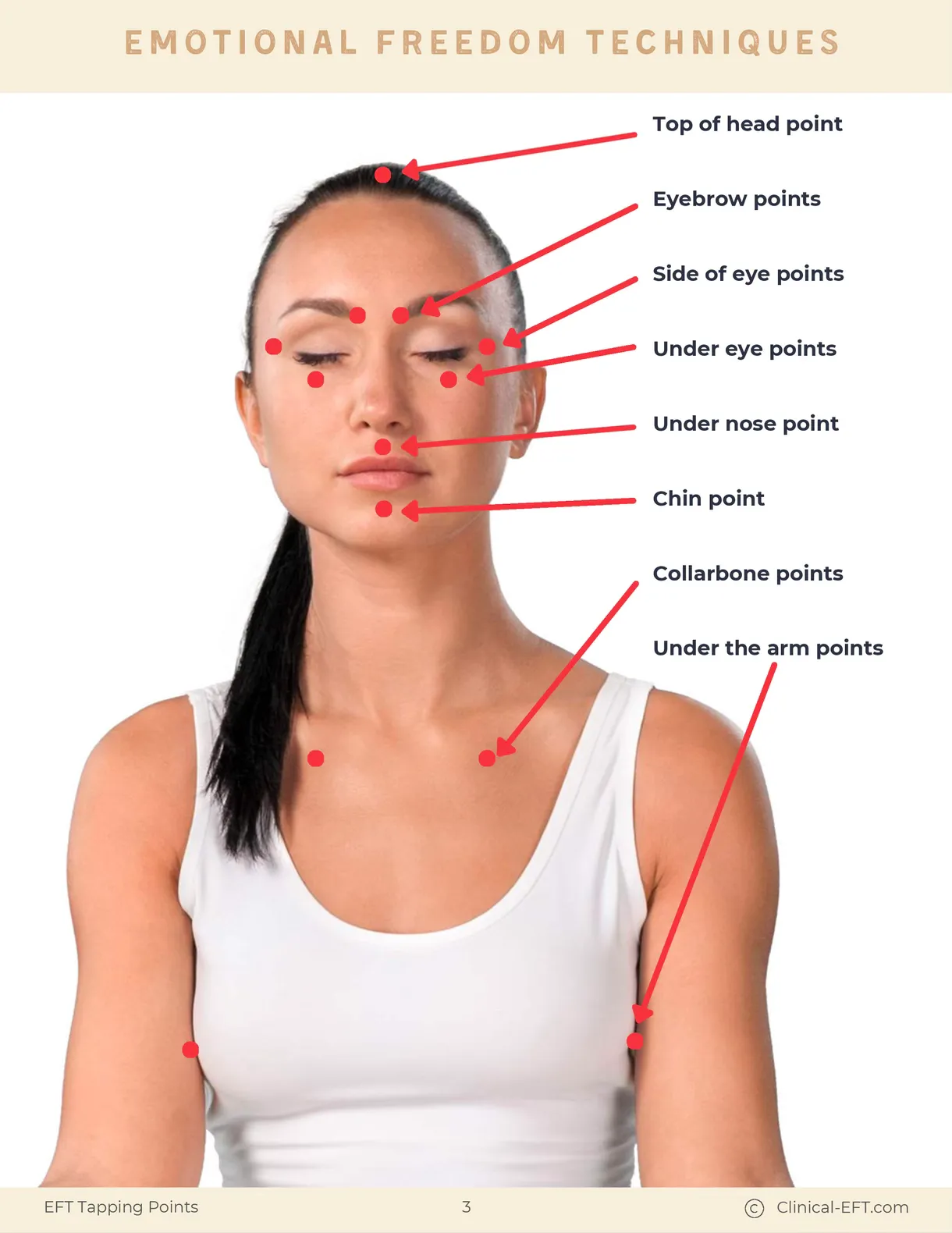
Step 2: Now tap on these points while acknowledging your feelings:
-
Top of the head
-
Beginning of the eyebrow
-
Side of the eye
-
Under the eye
-
Under the nose
-
Chin point
-
Collarbone
-
Under the arm
Notice the shift: Take a pause, breathe, and re-rate your anxiety level. What changed in your body? Most people notice at least some shift—maybe softer breathing, less tension, or a quieter mind.
This practice can help create a moment of calm and clarity. The beauty of EFT is that it's a tool right at your fingertips, available whenever you need it.
Your path to deeper healing
If you're reading this and recognizing yourself in these patterns, I want you to know something important: your anxiety isn't a life sentence. Your nervous system learned these protective patterns for very good reasons, and it can absolutely learn new ones that serve your present-day life.
Whether you’re new to tapping or looking for deeper healing, the Essential EFT Tapping Guide is grounded, clear, and created with care. Discover nine precise points used in Clinical EFT—and gain practical tools for greater well-being. It’s free, and yours to keep.
A gentle reminder as you move forward
Wherever you are in your journey with anxiety, please remember—your body isn't broken. It's been doing its best to protect you. The hypervigilance, the physical symptoms, the racing thoughts—these were all originally meant to keep you safe.
With compassionate attention and body-based approaches like Clinical EFT, your nervous system can learn new patterns that serve your present-day needs. The path forward isn't about fighting your anxiety—it's about listening to what it's been trying to tell you all along, and working gently with your body's natural healing wisdom.
You deserve to feel calm, centered, and confident in your daily life. That peace you're seeking? It's not only possible—it's waiting for you.
When you're ready, support is here.
With care,
🌿 Kay