
Most high-achieving women know this scene far too well:
It's 3 AM. Again. Your mind won't stop spinning, your body won't settle, and tomorrow is already knocking.
On the outside, you're composed—the reliable one everyone leans on. But inside you're running on fumes, wondering how much longer you can keep this up.
This goes far deeper than exhaustion. It's soul-deep depletion. And at some point, the strategies stop working. The deep breaths before meetings, the convincing "I'm fine," all start to crumble.
And that crumbling? It might be the most important message your body has ever sent you.
Your nervous system has been running on high-alert for so long, it feels normal. But under the surface? There's a quiet ache for peace. For rest. For a moment to exhale and feel like you again.
I created Inner Harmony for the woman who doesn't need another motivational quote or mindset hack. She needs nervous system relief — real, lasting, body-based healing. And maybe that's you. Like Katie, a fellow professional who came to me exhausted from perfectionism and left saying, 'After just a few sessions, my whole perspective changed.'
In this post, I'll share what inspired me to create Inner Harmony, how my own healing journey shaped it, and why this work is so different from most of what's out there. If you're ready to feel safe in your body, quiet the inner critic, and reconnect with the truest version of yourself… you'll want to keep reading.
Your body isn't fighting against you—it's fighting for you. And it's time someone fought alongside it.

Table of Content
- The Moment I Hit Rock Bottom — And What It Taught Me About Healing
- The Surprising Role of Your Emotions in Deep Healing
- How Stress Hijacks Your Body: What No One Tells You
- Quick Stress vs. Chronic Stress: Understanding the Difference
- I Did It the Hard Way (So You Don’t Have To)
- The Real Problems My Clients Face (And How 'Inner Harmony' Helps)
- The Missing Piece: Why Band-Aids Don't Heal Deep Wounds
- What Makes Inner Harmony Different—A Deeper Kind of Support
- Behind the Scenes: When Healing Looks Like Drawing
- A Case Study: Healing Through Art and Tapping
- From Survival Mode to Thriving: Real Stories of Transformation
- My Vision: A Future Where Nervous System Care Is the Norm
The Moment I Hit Rock Bottom — And What It Taught Me About Healing
I’m a certified Trauma-Informed EFT Master Practitioner with advanced training in Complex Trauma, Clinical EFT, Nervous System Regulation, Inner Child Healing, and Parts Work. But here’s what that really means: I’ve spent years learning how to help people whose bodies are saying ‘enough’ even while their minds insist ‘keep going.’
I’ve had the privilege of supporting mothers, nurses, caregivers, entrepreneurs, stockbrokers, and ministers—people who are highly capable, yet quietly exhausted.
And my most important credential?
I’ve lived this myself.
I grew up in a home where feelings were only welcome if they were pleasant — or quiet. Like many of my clients, I learned early to hold it all in, to be grateful and “good,” to smile even when I was hurting.
By the time I was a young child, my body had already started sounding the alarm. I was covered in eczema and prone to constant nosebleeds — physical signs of emotional stress that I didn’t yet have the language to express.
By age 18, the eczema was unbearable. It covered my entire body. I would scratch in my sleep until I bled, waking up every morning to stained bedding. I tried every cream, but the skin on my face would flake off no matter what I did. I’ll never forget walking down the busy city streets, trying to keep my head down, and feeling the stares. It wasn’t just embarrassing — it was shaming. I felt exposed, disfigured, and deeply alone.
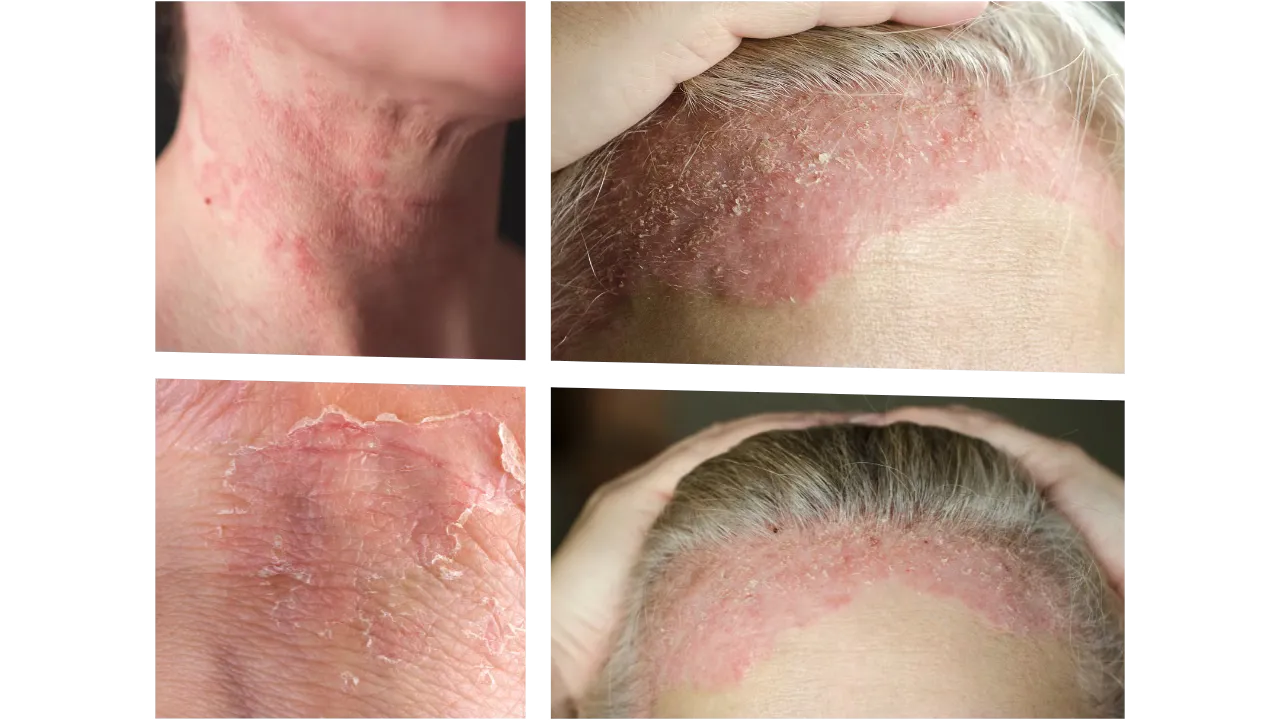
Eventually, I began working with a naturopath. My skin slowly improved, but the deeper roots were untouched. New symptoms crept in — relentless allergies, the stubborn weight that felt impossible to shift, and emotional eating that left me feeling ashamed and disconnected from my body.
Food became my lifeline — a way to pause, a way to soothe the ache I couldn’t name. I wasn’t reaching for snacks out of weakness or lack of willpower. I was reaching for comfort, safety, and the illusion of control when everything inside me felt like it was unraveling.
I wasn’t trying to be “unhealthy.” I was doing my best to survive. To quiet my nervous system’s screams — to feel okay, even if just for a moment. To hold myself together when I had no idea how to let go.
But beneath it all, my body was still screaming. And I kept ignoring it — until I couldn’t anymore.
Burnout. Breakdown. Call it what you will.
Everything I’d been holding in finally erupted. And in the wreckage, I realized: This wasn’t just about the eczema. Or the weight. Or the allergies. This was about everything I had stuffed down for decades — all the pain, pressure, perfectionism, and unresolved emotion.
What followed became a long, messy, beautiful healing journey. I didn’t “push through” it, though. I unwound from it — gently, layer by layer. And that’s what made it beautiful. Through nervous system work, tapping, expressive art, and deep emotional processing, I finally came home to myself.
And that is what I now offer my clients.
I understand—because I’ve been there:
-
Smiling on the outside while falling apart on the inside
-
Being the high-functioning woman whose nervous system is in constant survival mode
-
Finding what it actually takes for real, lasting relief — not by fixing yourself, but by finally listening to yourself
-
Discovering what it truly takes for real, lasting relief — not by fixing yourself, but by finally listening to yourself

The Surprising Role of Your Emotions in Deep Healing
It all clicked when I discovered Clinical EFT Tapping — and everything started to change in a way that finally made sense. Not because I learned another “technique,” but because I began to understand something deeper:
Our emotions are not the problem. They are the pathway to healing.
Your emotions aren't messengers of weakness. They're guides to what needs your attention most.
I began to see the body not as something failing me… but as a beautiful vessel with real limits. And when those limits are reached — when too much stays unprocessed for too long — that stress doesn’t just disappear. It shows up in the body as symptoms.
For me, it was persistent eczema, stubborn weight I couldn't shift, a constant sense of pressure in my chest, and emotional shutdown when I needed to be "on."
But when I finally stopped trying to push through, and started addressing the root of what was going on — that's when everything shifted.
Your body keeps the score—faithfully recording every 'I'm fine' you've said when you weren't. Those migraines that appear right before family gatherings? The digestive flare-ups during work presentations? They're not random betrayals. They're love notes from your nervous system saying, 'I can't carry this alone anymore.'
Your body responds to perceived threats faster than you can think a single thought—which means healing has to reach deeper than your mind alone.
Curious about how Clinical EFT Tapping works?I created a clear, practical Essential EFT Tapping Guide you can download for free. You'll learn the basics of tapping, including step-by-step instructions and the nine core points—so you can begin to experience gentle nervous system relief right away, even if you’re brand new to this approach.
How Stress Hijacks Your Body: What No One Tells You
Your body has its own built-in alarm system. Think of it as your internal smoke detector—except this one goes off for emotional fires too, and doesn't have a convenient 'hush' button when you're cooking up stress.
Stanford research shows this stress response can kick in within a tenth of a second — faster than you can think a single thought.
Have you ever noticed your heart pounding just from imagining a hard conversation or a worst-case scenario? That’s your body responding to a perceived threat — even if it’s not real. And that “threat” could be emotional, relational, or even stored trauma from decades ago.
Quick Stress vs. Chronic Stress: Understanding the Difference
Beneficial Quick Stress:
The helpful kind—a burst of focus before a presentation or deadline. Your body knows how to use this and recover.
Chronic Ongoing Stress:
The kind that never lets up—like a car alarm that's been blaring for months. This is what rewires your nervous system for exhaustion and illness.
Have you ever noticed how you get colds at the worst possible time—right after a big deadline or fight? That’s not random. Stress sinks immunity and flares inflammation— fast. Your body’s asking for rest, not more doing.
Your body keeps the score—faithfully recording every 'I'm fine' you've said when you weren't. Those migraines that appear right before family gatherings? The digestive flare-ups during work presentations? They're not random betrayals. They're love notes from your nervous system saying, 'I can't carry this alone anymore.'
The cortisol ride we’re dragged on daily doesn’t even give frequent flyer miles. Frustrating, isn’t it?
I Did It the Hard Way (So You Don’t Have To)
For me, healing didn’t come in one big breakthrough. It came in layers.
It meant facing the emotional wounds I carried from childhood, walking through the trauma of a painful marriage to someone struggling with addiction, and slowly untangling myself from years of codependency.
It wasn’t fast. I did it the long way—the very long way. It took more than a decade of trial and error to piece myself back together.
But here’s what I know now: if I had the tools I use today—Clinical EFT, nervous system work, and a trauma-informed approach—my transformation could have happened in a fraction of the time.
The real turning point came between 2023 and 2025. That’s when everything integrated. That’s when I finally felt the inner peace, strength, and clarity I had been chasing for years. And it’s when I knew: This is the work I’m meant to do.
I see that same transformation in my clients.
Like Sandy, a coach who came to me exhausted from imposter syndrome. She’d spent years hiding behind perfectionism and people-pleasing. At the end of her tailored Inner Harmony package, she wasn’t just “thinking differently”—she was living differently. She spoke with confidence on client calls, stopped second-guessing every move, and told me: “For the first time, I feel free to be myself without shame.”
And then there’s Lauren, who came to me after a painful divorce, carrying a heaviness that felt impossible to shake. She had tried journaling, meditation, even therapy, but the grief and self-blame lingered. Through EFT and inner child work, she didn’t just “cope” with the pain—she released it. She rediscovered joy, began painting again, and said: “It feels like I finally got my life back.”
These are the kinds of changes that fuel my work.
I created Inner Harmony because I’ve been that woman—the high-functioning one who looks calm on the outside but is collapsing on the inside. The one who is exhausted from pushing through. The one whose nervous system is so tightly wound that even rest feels threatening.
If this sounds familiar, please know: you’re not broken. You’re not weak. You’re not “too sensitive” or “doing it wrong.”
Your body is trying to lead you home.
And with the right support, there is a way back.
The Real Problems My Clients Face (And How 'Inner Harmony' Helps)
Every person who comes to me—whether they are a healthcare professional, a business owner, or a mother—arrives carrying more than they let on.
Take Kathleen, a nurse who initially came for “just some stress relief.” Beneath the surface, she was carrying decades of perfectionism that had been quietly exhausting her. This is what I consistently see:
-
Disconnection from Self – Feeling numb, confused, or out of touch with your own body and emotions.
-
Harsh Inner Criticism – That relentless voice telling you, “You’re too much,” and “Not enough,” at the same time. It celebrates your successes only to criticize you moments later, leaving no space for simply being human.
-
The Need to Stay “On” – The exhausting performance of having it all together, until you collapse on the couch too depleted to enjoy even your downtime.

These challenges don’t just live in your mind—they show up in real life:
-
You hold back expressing your needs until you reach a breaking point, then either lash out or shut down, followed by a wave of guilt.
-
You’re bone-tired… but the moment your head hits the pillow, your mind runs a full performance of worries—starring you in every possible role.
-
You can’t remember the last time you did something simply because it felt good—without first proving you “earned” the right to enjoy yourself.
Healing isn't about becoming someone new. It's about returning to who you've always been—beneath the noise, beneath the performance, beneath the coping.
Most people don’t even realize their nervous system is stuck in survival mode—they’re so accustomed to coping and pushing through that it feels normal.
But when healing begins with trauma-informed tools like Inner Harmony, everything shifts:
-
Thoughts become clearer, less tangled in worry
-
Tension in the body dissolves, often releasing patterns you didn’t realize you carried
-
Responses become intentional rather reactions
-
You feel anchored, present, and alive
-
You reconnect with yourself—your truest, most relaxed self
I honestly forgot what it felt like to just breathe and have my mind feel quiet. Finding that sense of ease and space again was a huge relief—almost like finally coming up for air after being underwater for years. I didn’t realize how tense and on edge I’d been until things started to shift. It feels good to finally feel like myself.
— Inner Harmony client
The Missing Piece: Why Band-Aids Don't Heal Deep Wounds
We're living in a world that keeps us in a constant state of stress. Between endless notifications, family needs, work pressure, and global uncertainty, most of us are running on empty—yet still being told to “try harder,” “think positive,” or “push through.” It’s no wonder our nervous systems never get a real break.
Too often in the wellness space—even with coaching or EFT—surface-level fixes are the norm. Instead of creating true safety to process what hurts, many approaches jump straight to “tapping in the good,” leaving our deeper pain unspoken and unresolved.
But genuine healing can’t be rushed.
You wouldn’t slap a bandage on a wound unless it was truly clean—because what’s hidden underneath doesn’t just disappear. Left ignored, it festers, causing more pain in the long run. That’s why bypassing or forcing positivity can actually deepen the ache instead of easing it. It’s also why the Inner Harmony experience is intentionally different.

My approach blends Advanced EFT Tapping, Trauma Recovery, Parts Work, Inner Child Healing, and creative expression. Each session is about slowing down, honoring what’s truly there, and gently tending to the root cause—not just the symptoms.
I often meet women who have tried “positivity” or mindset tricks, only to feel worse. One business owner described it perfectly:
“I thought I just needed to be more grateful, but I only felt pressure to get over it faster. When we finally addressed the pain I was carrying, it was the first real relief I’d felt in years. Like something heavy had finally been lifted.”
That’s the heart of Inner Harmony:
It’s slow. It’s intentional. It’s compassionate—never rushed, never forced.We create a space to truly clean out what’s been buried, so lasting healing becomes possible.
True healing isn’t about bypassing discomfort or pretending everything is okay. It’s about honoring every part of your journey, meeting yourself with courage, and gently letting go of pain’s grip on your present.
This is the kind of care I wish I’d been offered during my own years of chronic stress and emotional shut-down. It’s the gentle, thorough approach that’s changed my life—and now, the lives of so many women I work with.
What Makes Inner Harmony Different—A Deeper Kind of Support
There are a lot of healing programs and “quick fix” approaches out there, but Inner Harmony isn’t like anything you’ve tried before. Here’s how this experience stands apart:
Personalized, Trauma-Informed Support
Every session is private and deeply tailored—to your lived story, your nervous system, and the emotional habits you’ve carried for years. Instead of rushing to “fix” something, you’ll be truly seen and heard, with support that meets you as a whole person, not a set of symptoms.
Real Tools That Create Change
Inner Harmony draws on advanced, evidence-based techniques that help your body and mind actually shift out of old survival patterns. This is about real, lasting relief—not just feeling better for a day or two before falling back into the same cycle.
Healing That Goes Beyond Words
Sometimes, what needs to be healed can’t even be named. That’s why I weave expressive art into EFT sessions, guiding you to safely express and process layers of emotion and memory that talk therapy alone often can’t reach. It’s a gentle way to let your body and creativity speak.
Support That Continues Between Sessions
The journey doesn’t end when a call wraps up. You’ll get thoughtful prompts, creative exercises, and check-ins to help you integrate what you’re learning—so change sticks, and you always have something to lean on.
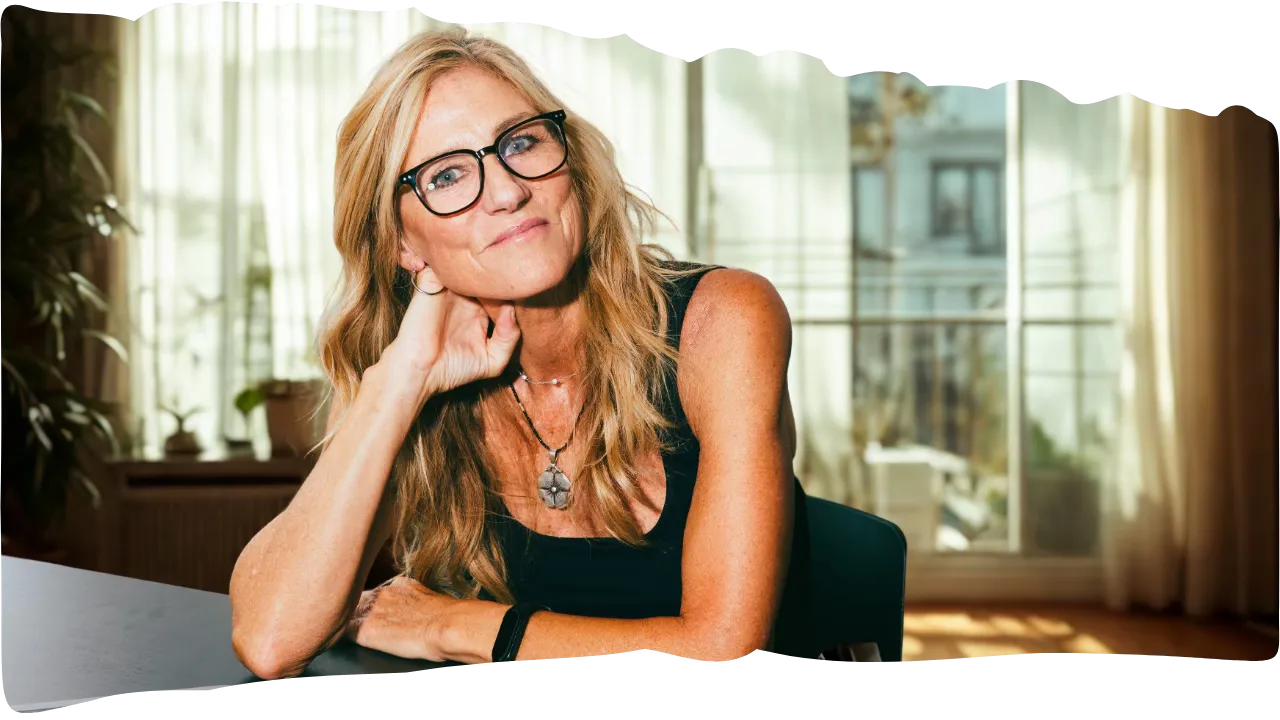
A Pathway That Fits Where You Are Now
There’s no one-size-fits-all approach.
-
RESET (3 months): For women seeking clear, focused relief from high-functioning anxiety and overwhelm. If you’re burned out and need skilled support to shift your nervous system, this is your entry point.
-
TRANSFORM (12 months): For those ready for deep, comprehensive restoration—a full recalibration of mind and body in a safe, supported space over time.
No matter where you begin, Inner Harmony is about more than symptom management. It invites you to come home to yourself: to find real calm, rebuild self-trust, and finally rest.
Behind the Scenes: When Healing Looks Like Drawing
In the world of EFT, approaches and training levels can vary widely. While many coaches are deeply well-intentioned, there’s a significant difference between basic tapping for emotional support and trauma-informed work that prioritizes your long-term safety.
For those of us who have pursued advanced training, the focus is never on “quick fixes.” Instead, it’s on creating a steady, safe environment where your nervous system feels genuinely supported—so deeper transformation is possible.
That’s why, in my sessions, we begin with gentle grounding and client-led exploration, making sure you always feel safe and respected.
You might remember how children sometimes draw their feelings after something difficult happens. This isn’t just a creative exercise—it’s a trauma-aware tool that lets the body express what words can’t always reach. Even as adults, when talking feels overwhelming, drawing becomes a gentle gateway into your experience.
In many of my Clinical EFT sessions, I invite clients to use drawing—not because you can’t speak, but because your nervous system sometimes holds stories that go beyond language. By exploring what you’re feeling through simple images, we give space for your subconscious to communicate safely. Paired with tapping—which soothes stress and helps gently shift associations—this process supports healing from the inside out.
We’re not reliving pain or forcing insight. We’re steadily building safety, trust, and understanding, letting your nervous system lead the way—one gentle session at a time.
“The body speaks in images before it finds words. When we honour this visual language, healing reaches places that conversation alone cannot touch.”
A Case Study: Healing Through Art and Tapping
With the Picture Tapping Technique—a blend of creativity and clinical grounding—I invite clients to let their subconscious lead, giving the nervous system a new voice when words fall short. This right-brained process supports deeper, whole-person healing that often surprises even those who consider themselves “practical” or “not artistic.”
Here’s what that can look like in real life:
Stage 1: Raw Issue
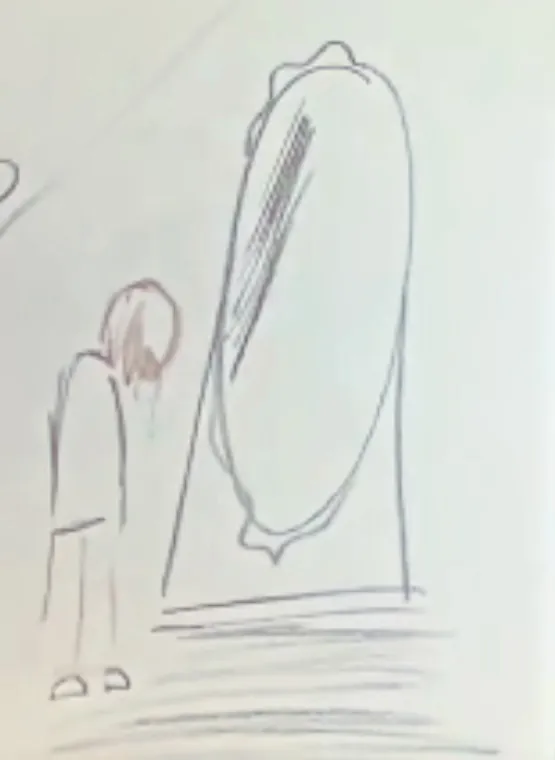
In the first picture, my client drew herself with ‘hanging, heavy shoulders’ before a black mirror—her face missing, isolated, and shaded in turmoil. The colors and composition reflected the raw weight of self-criticism and hiding emotional pain from the world.
Stage 2: The Flow of Emotion
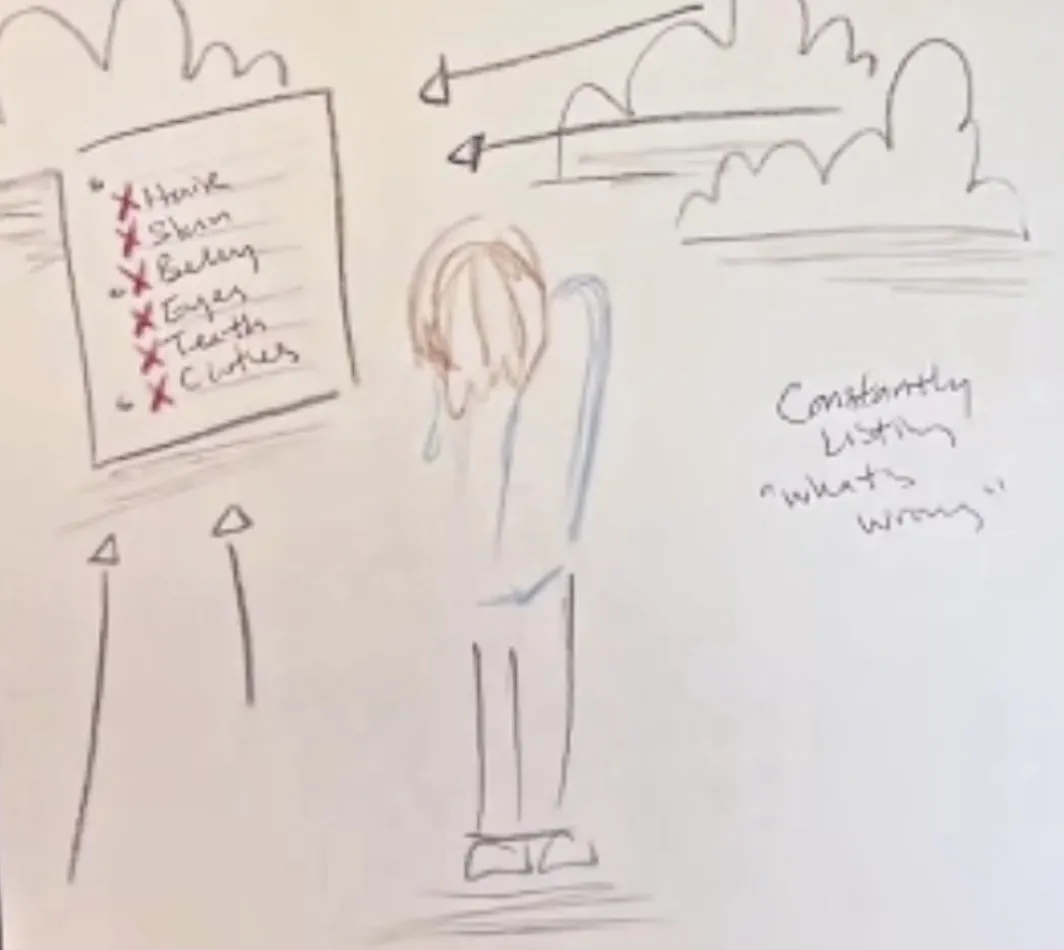
The next picture revealed a gentle transformation: black clothing faded to blue, hinting at hope and new openness. A single tear appeared—proof that her emotions were finally being allowed to move rather than staying locked inside. She faced left in the image, a subtle sign of courage as she acknowledged her past. The looming clouds in the background became lighter, outlined rather than overpowering, showing that challenges now felt manageable, not overwhelming.
Stage 3: Resolution and Integration
With time—and many small steps later, she created a piece she titled “I Am Energy.” The change was unmistakable—her self-image was calm and centered, radiating color from the heart. Vivid greens and golden light replaced the earlier darkness. She described feeling “so calm and pleased”—a sure sign of deep integration.
What stands out about this process is not just what appeared on paper, but the emotional change that followed. By making space for her inner world in this gentle, creative way—and pairing it with the steady rhythm of tapping—she found a level of relief and self-connection that talk therapy alone hadn’t reached.
We didn’t just “tap away” anxiety or chase quick fixes. Together, we walked a real path from fragmentation to wholeness, drawing by drawing, layer by layer. This is the heart of Inner Harmony: healing that goes deeper than symptom relief, fundamentally changing your relationship with yourself—with patience and kindness.
But healing never looks the same for everyone. Here are some ways women have begun to reclaim parts of themselves and move from simply getting by to genuinely living again:
From Survival Mode to Thriving: Real Stories of Transformation
Many women who come to Inner Harmony are used to pushing through, downplaying their needs, and feeling out of sync with their bodies—just as I once did.
They arrive simply hoping to feel less overwhelmed—what surprises them most is how much more is possible when their nervous system finally has room to exhale.
These aren’t stories of instant transformation.
They’re about what changes when you have enough space and calm support to go at your own pace, and start to feel safe—not just in your mind, but right down to your nervous system.
What unfolds next is different for everyone, but each story has this thread in common: healing that’s patient, real, and deeply grounded in how you actually feel.
After a painful divorce, one woman described feeling “in a very dark place emotionally.” As we worked together, she shared,
“I could actually feel the tension and grief leave my body during our sessions. It didn’t happen all at once, but there was finally space for me to move forward with more trust in myself.”
Want to try a simple, self-led tapping exercise for yourself?
My free Essential EFT Tapping Guide walks you through each step, so you can experience how gentle and approachable this technique truly is.
For some, the real shift is subtle yet life-changing: that critical inner voice softens, worry loses its grip, and self-doubt is replaced by a quiet steadiness. What once felt impossible—confidence, creativity, even rest—becomes natural again.
Another client, a nurse and coach, noticed: “I could actually feel the doubt leave my body with each tapping session.” By learning to recognize and gently work with those protective parts of herself, she slowly rebuilt confidence and began moving forward with more ease.
Each journey is personal and unfolds at its own pace. But they all have something in common: steady, gentle nervous system work can lead to changes that reach far beyond just coping. These aren’t “success stories” for the sake of it. They’re real glimpses of women gradually coming home to themselves—often in ways they never expected were possible.
The work we do together isn’t about fixing what’s broken. It’s about creating safety, space, and genuine partnership so your whole self can finally come home.
Healing happens not when you push harder, but when you finally feel safe enough to let go.

My Vision: A Future Where Nervous System Care Is the Norm
The world isn’t slowing down—but you can. While others continue rushing through life with mounting tension, you can choose a different path.
You can learn a new way to relate to your body, your emotions, and your life. One where rest isn't something you earn—it’s something you reclaim as your birthright.
I believe the future of healing is gentle, body-based, and deeply human.Not hustle. Not performance. Not just talk.
Inner Harmony is part of that future. And if your soul is whispering that it’s time… I’d be honored to support you.
If you recognize yourself in these stories of coping and striving, you’re certainly not alone. Many women have spent years doing all the “right” things—working harder, thinking harder, trying to manage everything they feel—and still not finding the genuine relief they crave.
My work is dedicated to supporting you as you discover what true nervous system relief feels like—relief that isn’t about “coping better,” but about allowing your body and mind to find genuine inner calm.
Whether you experiment on your own with these body-based tools, or seek help from a professional, the journey toward lasting healing is always yours to shape. There’s no need to force, strive, or hustle for healing. Like many of my clients, you might find that the gentlest paths—the somatic, compassionate ones—lead to the most sustainable change.
Support is always available, in whatever way feels right for you. My role is simply to walk alongside you—helping you listen deeply, get curious about your body’s wisdom, and recover the peace that’s always been possible.
With warmth and steady support,
🌿 Kay